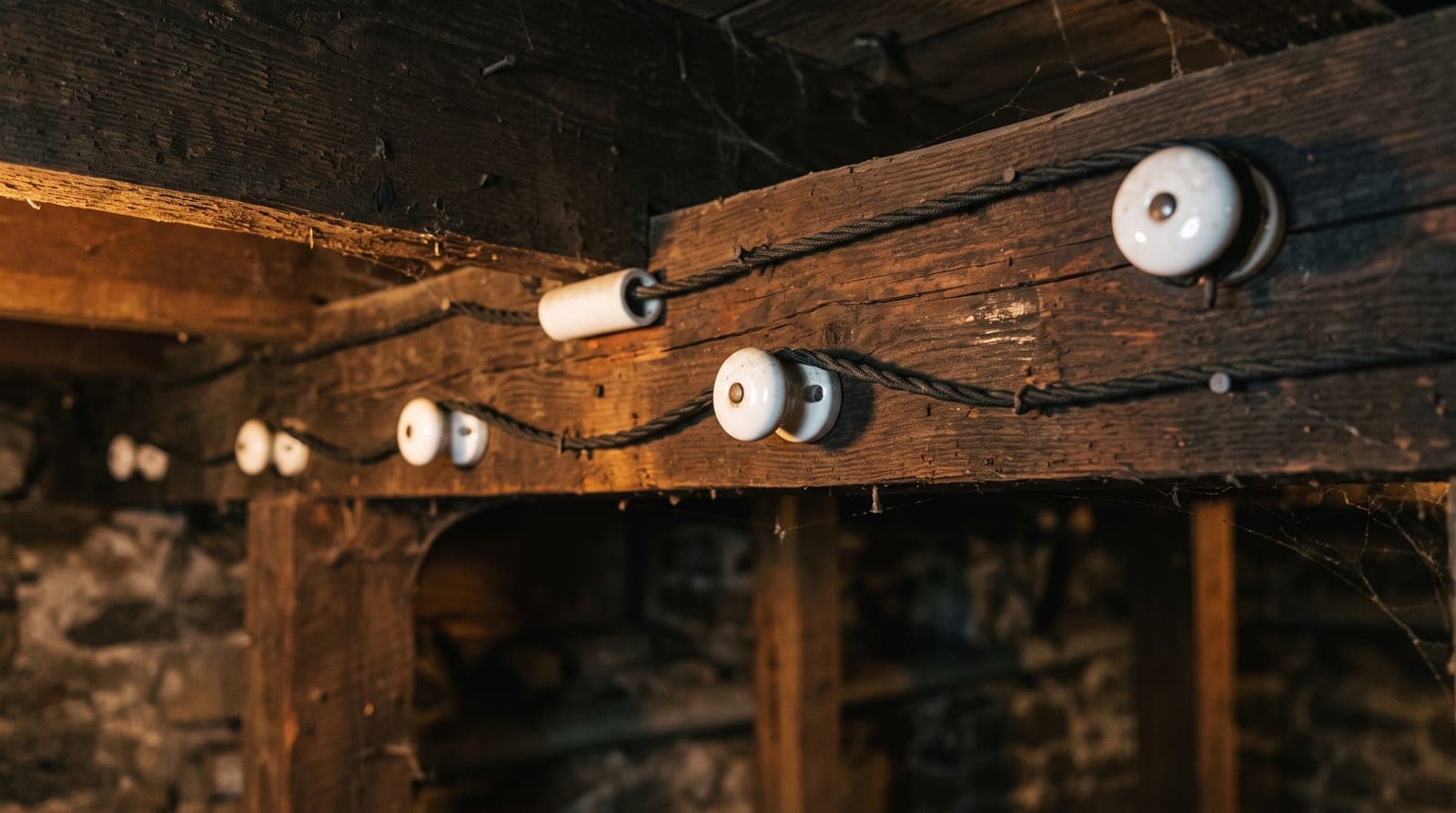
I have had a lot of deals get complicated. This is the one where the complication was wiring installed before anyone in the transaction was born.
If you are looking at older homes in Hamilton, Burlington, or anywhere with real housing stock from the early 1900s, this one is worth understanding before you write an offer.
The direct answer
Knob and tube wiring is not illegal in Ontario. The Electrical Safety Authority allows it to stay if it meets their criteria and passes inspection by a licensed electrician. There is no rule saying you must rip it out.
The problem is insurance. Many insurers will not write a policy on a home with active knob and tube, because of fire risk. And here is the chain that catches people:
No insurance means no mortgage. Your lender requires you to insure the property. If nobody will insure it, the deal cannot fund. That is how something that looks like an electrical question becomes a financing question.
What insurers actually do
Expect one of three responses on a home with active knob and tube.
- They decline. Plenty of Ontario insurers simply will not write a new policy, and some will not renew an existing one once they find out.
- They cover it conditionally. Some will issue a policy on the condition that the wiring is replaced within a set window, commonly 30 to 60 days after closing. This is the most common workable path.
- They cover it at a higher premium, sometimes after an inspection confirming the wiring is in acceptable condition.
Aluminum wiring, common in homes from the 1960s and 70s, runs into similar treatment for similar reasons.
The cost to rewire is not trivial. It varies a lot with the size of the home and how easy the walls are to get into, so get real quotes rather than guessing at a number.
The deal that nearly did not close
Here is how this played out for me, with the details kept general.
I was representing a buyer on an older home. Estate sale, vacant, and everyone knew going in that the place needed work. We did not do a home inspection, which sounds reckless until you know the context: the property was empty and stripped back enough to see, we knew about the knob and tube, and the buyer's son was an electrical apprentice who was comfortable taking the work on. This was a renovation purchase, and my client's eyes were open.
So we bought it with a financing condition only.
Then the lender sent an appraiser. The appraiser noted knob and tube in the report.
Now, an appraiser is not an electrician and not a home inspector. They are not in a position to determine how much knob and tube is present or whether any of it is still active. We made that argument. It did not matter, because the lender took the appraisal at its word.
And my client's situation limited which lenders we could realistically work with, so walking away to a different lender was not the easy option it would normally be. We had far less room to manoeuvre than usual.
Then came the demand that made everyone stop: the lender wanted the knob and tube removed before closing.
Read that again. Remove wiring, from a house, that my buyer did not own yet.
How we actually solved it
This is genuinely unusual. In my experience it is insurers who care about knob and tube, and their normal approach is to let you close and require the work within 30 or 60 days. A lender demanding removal before possession is a different animal.
We had three problems at once. We did not own the property. The work had to be paid for by a buyer whose money was tied up until closing. And the lender would only increase the mortgage so far, which put a hard ceiling on what we could spend.
So we did three things.
We went to the sellers and made it a win, not a favour. The estate had a property with knob and tube, which meant any buyer was going to hit this eventually. Our position was straightforward: the buyer covers the entire cost, you simply allow access to get it done. That reframing is what got a yes.
We used an electrician I trust. This mattered more than anything else. When someone is in a corner, it is easy to get quoted a number that reflects the corner rather than the work. I went to an electrician I have a relationship with and who understood the constraint we were operating under.
We scoped the work to what the lender actually required. The lender's requirement was that there be no active knob and tube. That was it. So the work was done to hit that standard within our ceiling, with some finishing left for the buyer's son to complete afterward. We got exactly what the financing needed without spending money on things that were not required yet.
The electrician finished on time. We closed. The buyer got the house they wanted at the price they wanted, and the estate got their sale. Everybody walked away happy from a deal that looked dead for about a week.
What buyers should take from this
- Older home? Ask about the wiring before you offer. Not after.
- Talk to an insurer early, on that specific address. Insurability is the real gate, and you can find out cheaply.
- Keep a financing condition. Ours is the only reason this story has a happy ending. Without it we would have been firm on a house we could not fund.
- Get quotes before you need them. Knowing the number gives you something to negotiate with instead of panic.
- Do not assume the closing date is your move-in date when there is work tied to funding.
What sellers should take from this
If your home has knob and tube or aluminum wiring, it will come up. Someone's inspector, appraiser, or insurer will find it.
That is not a reason to panic, and it does not stop your home from selling. It is a reason to tell your agent at the very beginning so we can plan for it, price with it in mind, and have answers ready instead of scrambling during a conditional period when the buyer has all the leverage.
The takeaway
Knob and tube is legal, insurable in some cases, and manageable in most. But it can quietly become a financing problem, because insurance sits between you and your mortgage.
Know before you offer. Ask an insurer early. Keep your financing condition. And work with people who will solve the problem rather than just deliver the bad news.
If you are looking at older homes and want someone who has been through this exact scenario, that is the kind of buying I genuinely enjoy.