Every seller asks me some version of the same question. "Do we need to stage it?"
The honest answer is that it depends, and I would rather give you options than a rule. Staging can absolutely help. It can also be the wrong call for your situation, and almost nobody in my business will tell you that part.
The direct answer
If your home is vacant, staging is usually an easy yes. If you are still living in it, staging deserves a real conversation, because rented furniture in an occupied home comes with tradeoffs that nobody mentions until you are living with them.
And in either case, the biggest wins do not come from adding furniture. They come from removing things.
Why I usually start with a consultant, not a truck
For most of my listings I bring in a staging consultant first. Not to automatically fill the place with rented pieces, but to get an expert set of eyes on what is already there.
Often the verdict is that the furniture is genuinely fine. What the home actually needs is fewer things in it, a different arrangement, and a few small pieces to warm it up. That costs a fraction of a full staging package and gets you most of the benefit.
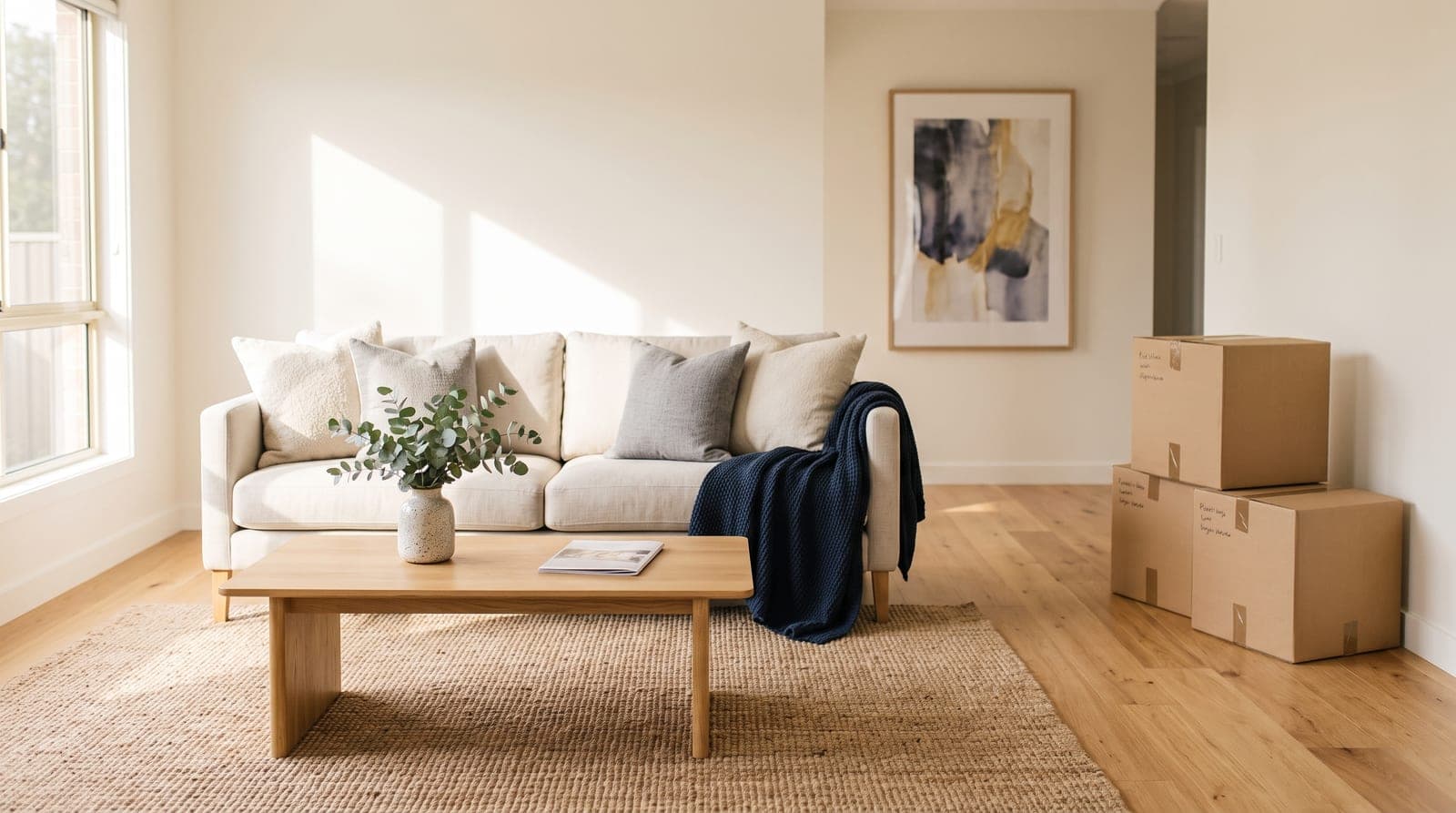
That middle ground has names in the industry. Occupied staging is working with your existing furniture while you still live there. Soft staging is lighter again, adding only accessories like artwork, cushions, and fresh towels. Both are usually far more practical for a family still using the house.
The part nobody warns you about with full staging
If you are living in the home, rented staging furniture changes your daily life.
Depending on your neighbourhood and the market, a home can sit for weeks. In some stretches the average is closer to fifty days. That is fifty days of living around furniture that is not yours, that you have to keep pristine, and that you will be charged extra for if it gets damaged.
Now add young kids to that picture. A staged living room with a rented sofa and a three year old is a stressful combination, and the stress is not worth it if your own couch would have photographed just fine.
This is exactly why I would rather lay out the choices than hand you a policy. Vacant home, long enough timeline, furniture that is genuinely hurting the space? Stage it. Living there with your family in a home that already shows well? There is usually a smarter path.
Remember who you are actually staging for
Here is the reframe that helps sellers most. You are not decorating for the dozen people who walk through your door. You are building the photos.
Almost every buyer meets your home online before they ever book a showing. The photos decide whether the showing happens at all. So the question is never "does this room look nice," it is "will this room look excellent in a photograph."
That is also why decluttering beats decorating. Cameras exaggerate clutter.
The prep that matters more than furniture
If you did nothing else, do these.
Remove and declutter. This is the highest-value thing on the list. Excess furniture and belongings make rooms read smaller. Clearing them out makes the same space feel bigger without spending a dollar on anything new.
Depersonalize. Family photos, kids' artwork, the collection on the fridge. Buyers have a hard time imagining their life in a home that is visibly full of someone else's.
Deep clean. A genuinely deep clean, not a tidy. It is the cheapest credibility you can buy. A spotless home signals a well-maintained home.
Paint, or at least wash the walls. Of everything you could spend money on before listing, paint gives the most reliable return. Sometimes the walls just need washing and that is enough.
My favourite trick: two boxes a week
Decluttering feels enormous when you stare at the whole house. So do not.
If you know you are listing in the spring or the fall, start now and pack two boxes a week. That is twenty minutes on a Sunday. Do it for two months and you have packed over a dozen boxes without a single stressful weekend.
Two things happen. Your home gets progressively more open and photogenic. And you are already ahead on the move you were going to make anyway.
While you are at it, this is the best time you will ever have to throw things out or donate them. You are touching everything you own regardless. Every box you do not move is a box you do not pay to move.
The takeaway
Staging is a tool, not a requirement. The right answer depends on whether the home is occupied, how your furniture actually photographs, how long homes like yours are taking to sell, and what your family can realistically live with.
What is not optional is preparation. Declutter, depersonalize, deep clean, and paint where it counts. That work sits underneath every good listing, staged or not, and it is where the return is most predictable. It is also step one of the selling timeline, long before a sign goes up.
If you are thinking about selling and want a straight opinion on what your home actually needs, that is a walkthrough I am always glad to do.