Every seller asks me some version of this, usually a little nervously. "Do I have to tell them about the thing?"
It is a fair question, and the answer is more specific than most people expect. Ontario draws a line between two kinds of problem, and which side of that line your issue falls on changes everything.
Quick note before we go further: this is practical context from doing deals, not legal advice. Disclosure disputes end up in court, and if you have a genuinely tricky situation, talk to a real estate lawyer.
The direct answer
Ontario operates on caveat emptor, which means buyer beware. The starting assumption is that a buyer inspects and investigates, and the seller is not obligated to walk them through every flaw.
But that rule has real limits. A seller must disclose a material latent defect they know about if it makes the home dangerous or unfit to live in. And caveat emptor never protects a seller who hides something, lies about it, or is wilfully blind to a serious problem.
Patent defects: visible, and generally the buyer's job
A patent defect is one a buyer could reasonably discover by looking. The stained ceiling. The cracked driveway. The roof that is visibly at the end of its life. The window that does not close properly.
Under caveat emptor, you generally are not required to point these out. The buyer is expected to inspect, and in this market they almost always do.
That is the legal position. My practical position is a bit different, and I will get to it.
Latent defects: hidden, and this is where duty kicks in
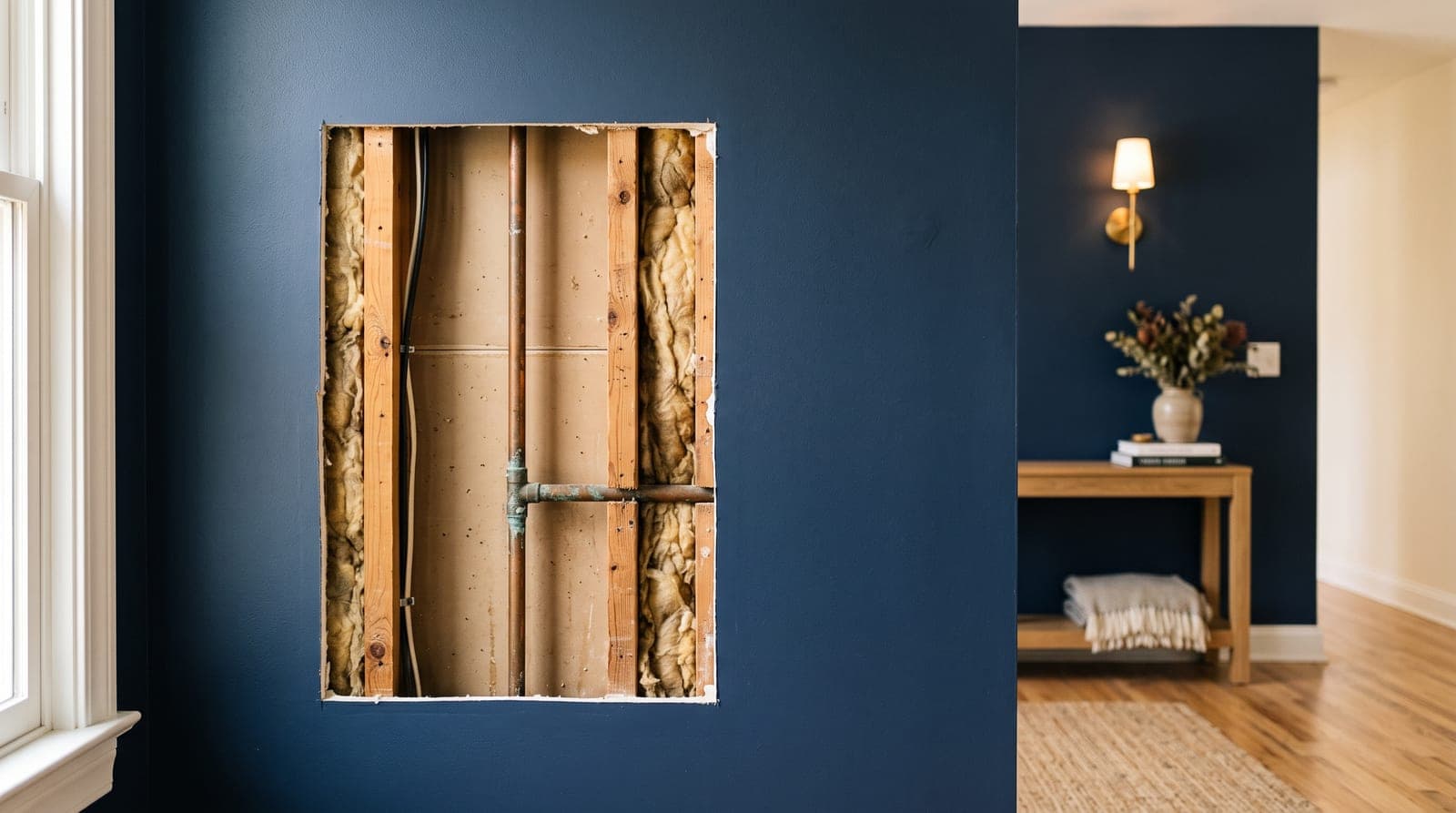
A latent defect is one a buyer would not find through a reasonable inspection. Something behind a finished wall. A problem that only shows up in certain conditions. An issue that has been covered over.
Here is the key part. The duty to disclose is not triggered by every hidden flaw. Courts have focused on material latent defects that the seller knows about and that make the property dangerous or unfit for habitation, or that create a serious health or safety risk.
Two things follow from that.
You have to actually know. If a genuinely hidden defect exists that you had no knowledge of, caveat emptor generally still applies. You cannot disclose what you do not know.
Severity matters. A hidden imperfection is not the same as a hidden hazard. The obligation centres on the serious end of the scale.
The three things that will sink you
Caveat emptor is a shield, but it has holes, and sellers get hurt in exactly three ways.
Active concealment. Painting over a water stain, putting a bookshelf in front of a crack, patching something specifically so it will not be found. This turns a defect you might have had no duty to mention into a genuine problem.
Misrepresentation. Saying the basement has never leaked when it has. Answering a direct question with something untrue. If a buyer asks, answer honestly.
Wilful blindness. Deliberately avoiding finding out about something you suspect. Choosing not to look is not the same as not knowing.
The pattern is consistent. Silence about something visible is usually fine. Actively hiding, lying, or dodging is not.
Why I ask about problems on day one
Here is where my practical advice goes past the legal minimum.
At every listing appointment, I ask sellers directly what they know about. Past leaks. Old wiring. A permit that never got closed. A repair that was done informally. Anything.
Not to talk you out of selling, and not to force disclosure of things that do not require it. I ask because I would rather deal with something on day one than during a conditional period.
Buyers in this market inspect. Whatever is there tends to come out. If I know at the start, we plan around it, we price with it in mind, and we have answers ready. If it surfaces on day four of a five day inspection condition, the buyer holds all the leverage and we are negotiating from behind.
Older wiring is the perfect example. Knob and tube is often visible in a basement, which makes it patent, but it can also create insurance and financing problems that are anything but obvious. That is a conversation you want to have before you list, not on a Thursday afternoon while a deal wobbles.
Why I do not push pre-listing inspections
Some agents recommend a seller-paid inspection before listing. I generally do not.
The reason is simple. In this market, the buyer is almost certainly doing their own inspection anyway. A pre-listing report often duplicates that work at your expense, and it can create its own complications about what gets shared and how.
What actually helps is the honest conversation described above. Tell me what you know. That costs nothing and does far more.
If you are the buyer, read this part
Caveat emptor is not a technicality. It genuinely means the responsibility to investigate is yours.
Get an inspection. If something is visible and you skip the inspection, that is on you. This is exactly why the inspection condition exists and why I take it seriously.
Ask direct questions. A seller can stay quiet about a patent defect, but answering a direct question dishonestly is a different matter. So ask.
Look at the age of things. Roof, furnace, windows, wiring, panel. Age is not a defect, but it is a cost you should be pricing in.
The takeaway
Patent defects are visible and mostly the buyer's responsibility to find. Material latent defects that you know about and that make the home dangerous or unfit are yours to disclose. And nothing protects concealment, dishonesty, or deliberately not looking.
For sellers, the practical rule is easier than the legal one: tell your agent everything at the beginning, answer direct questions honestly, and never cover something up.
If you are getting ready to sell and there is something on your mind that you are not sure about, raise it with me early. That conversation is almost always simpler than you are expecting, and it is far simpler than the alternative.